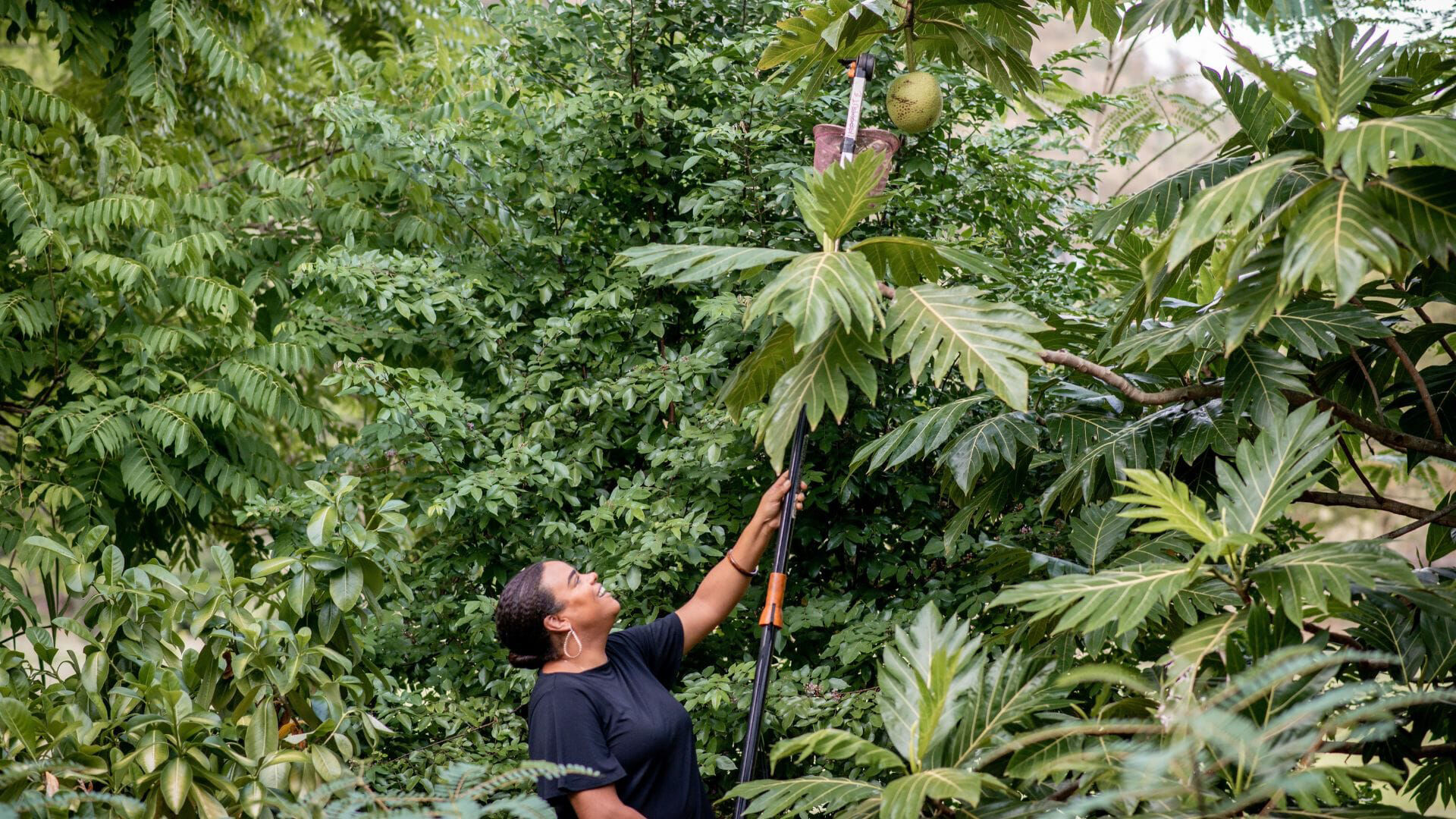
Islands’ and Global Treasure: The Breadfruit Institute
Is eating local—eating ʻono and pono—one of your values? You want to put good food on the table for your family and reduce island dependence on imports? Take inspiration from the Breadfruit Institute, which reports that under good conditions, some varieties of breadfruit can produce well over 200 fruits per year. Now, that’s food security!
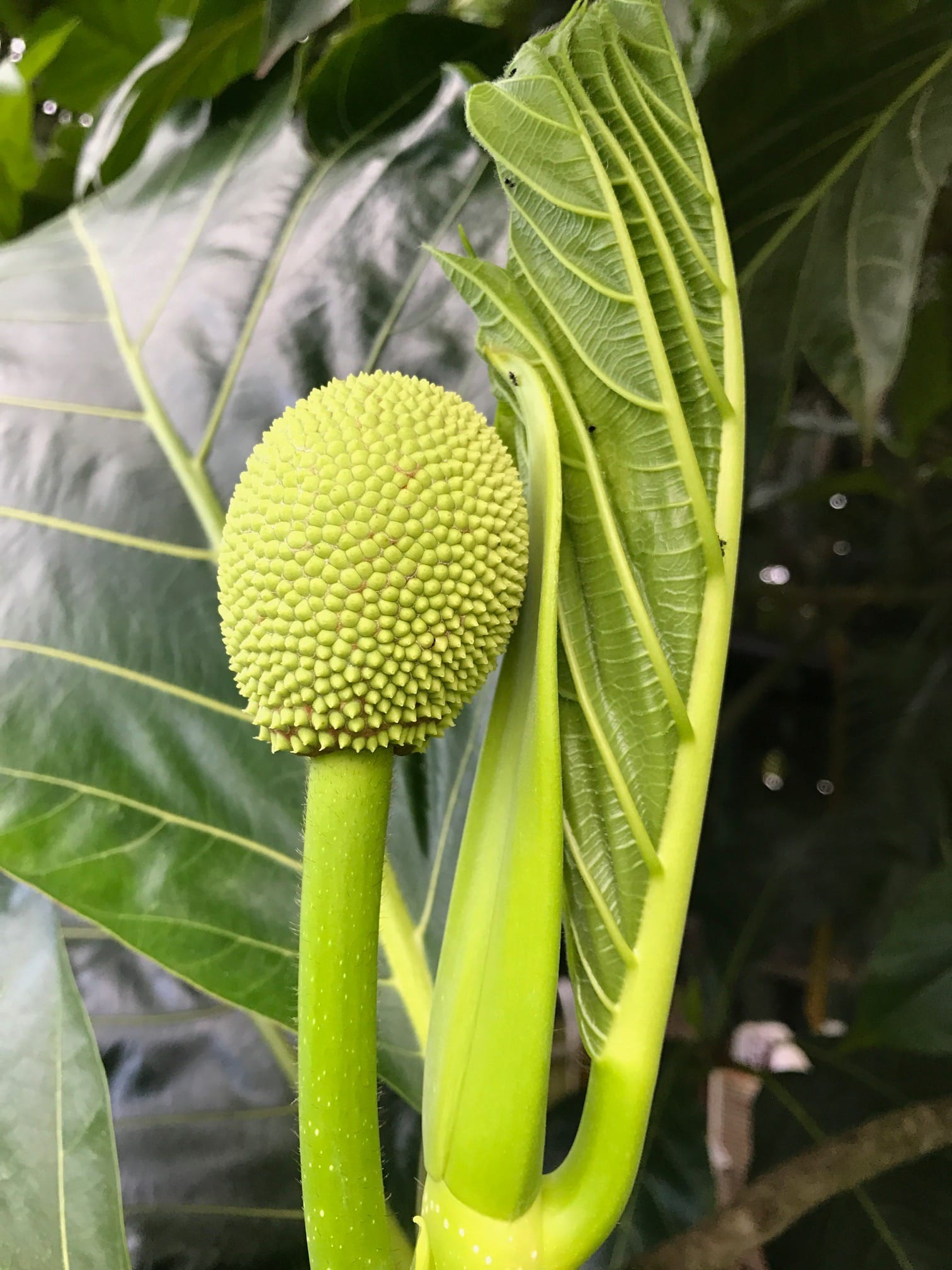
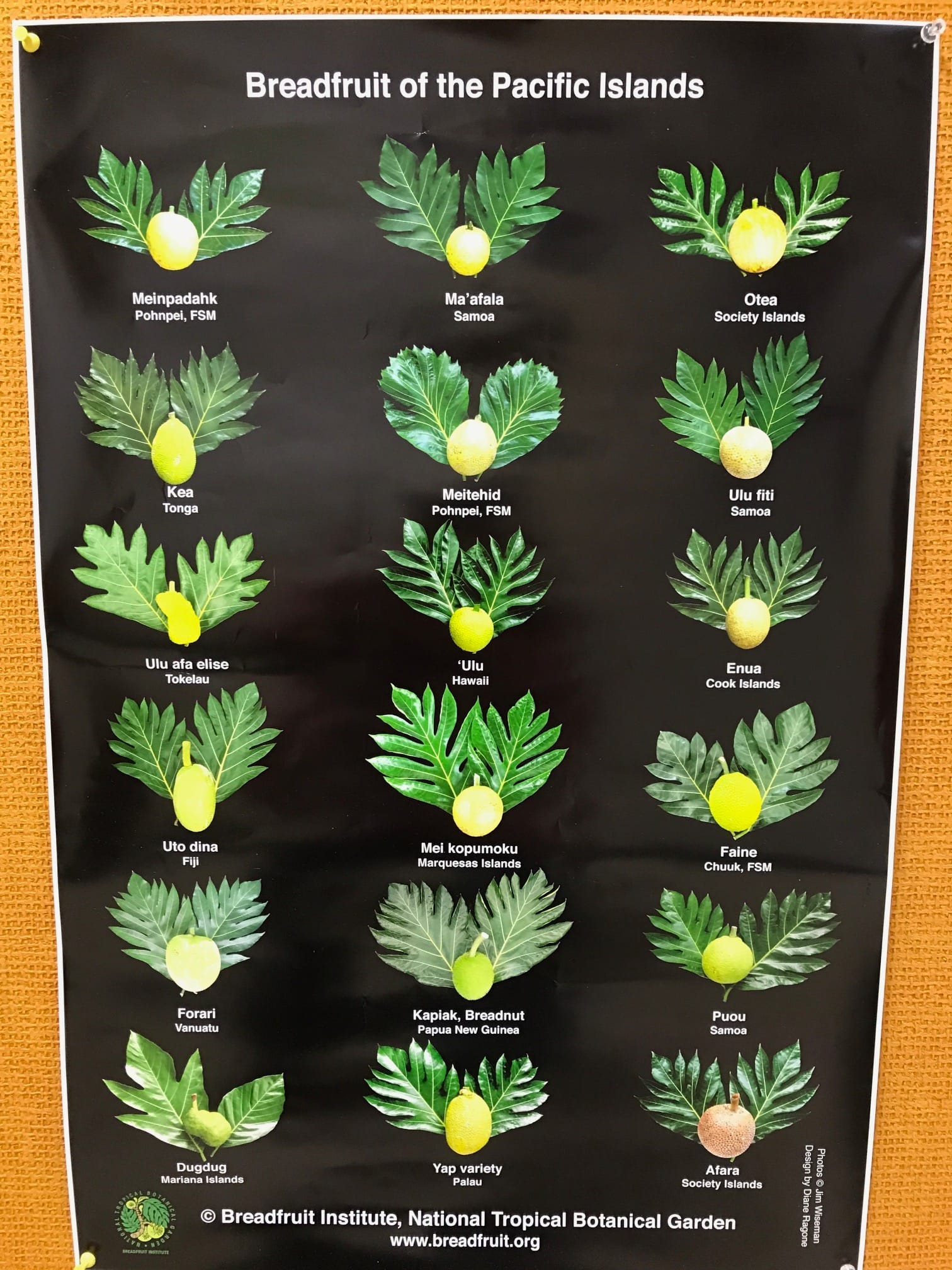
And the Institute should know. Headquartered on Kauaʻi as a program of the National Tropical Botanical Garden’s (NTBG) Science and Conservation Department, the Breadfruit Institute is all about the conservation and use of breadfruit. Where Slow Food has the Ark of Taste, the Institute represents the global ark for breadfruit, researching and conserving diversity, encouraging cultivation and consumption, safeguarding indigenous knowledge, and sharing the best organic agroforestry techniques for the tree. NTBG hosts more than 150 varieties of the tree, with the majority at Kahanu Garden, in Hāna on Maui, making it the most comprehensive living collection of breadfruit. The collection represents traditional varieties from more than 30 islands in the Pacific, as well as the Seychelles, Indonesia, the Philippines, and Honduras.
Good food: For Hawaii and the world
As a longstanding staple crop of Indigenous Pacific Islands communities, numerous varieties of the fecund breadfruit tree are grown across the Pacific. The suitable growing range for the trees includes regions such as the Caribbean, Central America, Africa, and elsewhere in the tropics. The ʻulu we eat is one of three Artocarpus species (part of the Moraceae, fig, family). The tree’s scientific name has Greek roots, translating to “tree bread.” That’s a very apt name, given the breadfruit’s potential to help staunch hunger across the tropics. Diane Ragone, PhD, founder and Director of the Breadfruit Institute for most of 20 years (now Emerita), conducted research throughout Oceania for over four decades, including field collection of plant material and interviews with Pacific islands colleagues, elders, and practitioners.
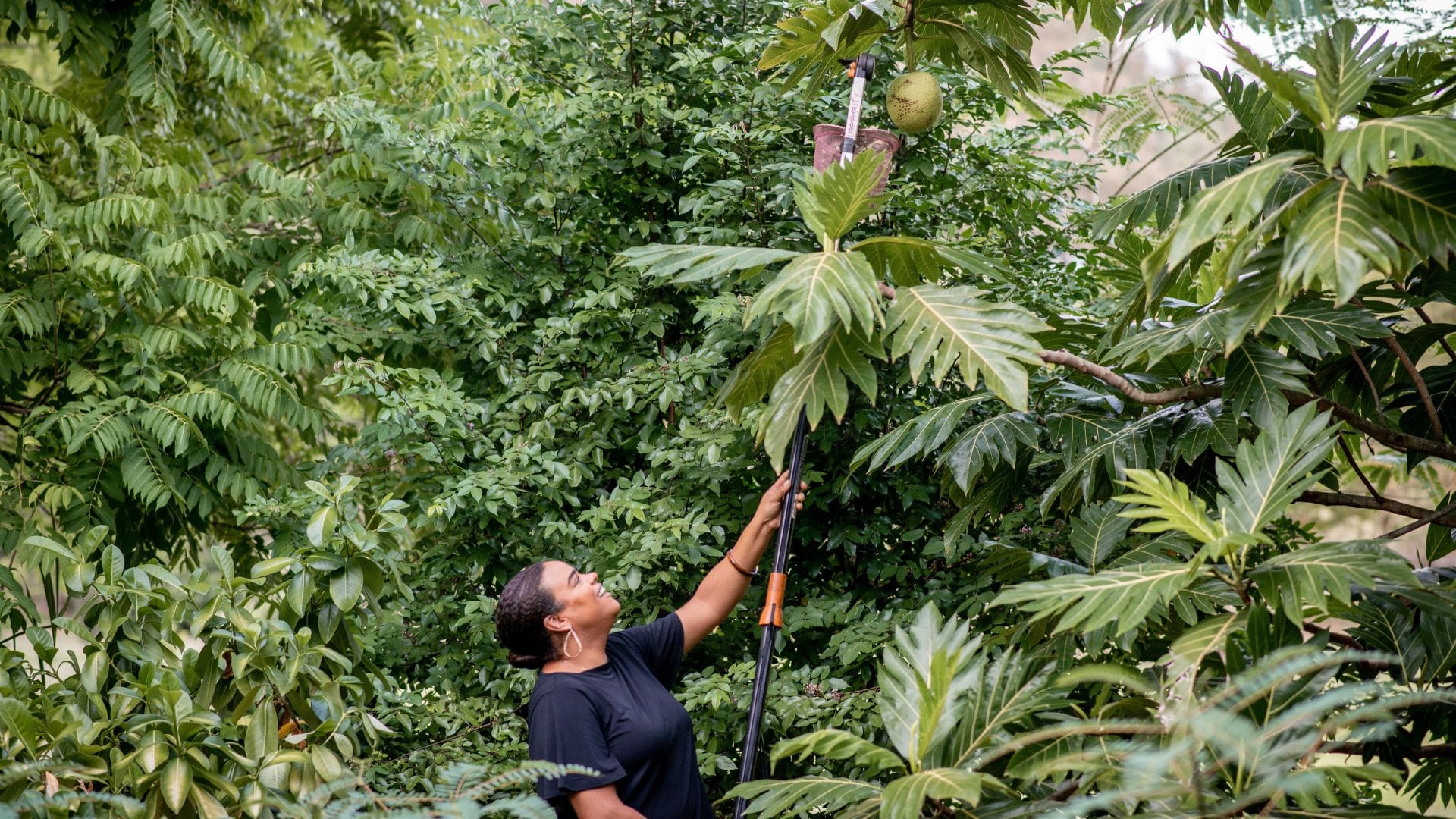
Today, under the guidance of NTBG’s Director of Science and Conservation, Tiffany Knight, PhD, the Institute continues to build on Dr. Ragone’s legacy—through breadfruit research and biocultural conservation efforts. The Institute is working with farmers, communities, and partners across Hawai’i and the Pacific to understand breadfruit diversity, strengthen food security, and support diversified, ecologically sound agriculture. At the McBryde Garden on Kaua‘i the Institute has a Regenerative Organic Breadfruit Agroforestry demonstration. Agroforestry integrates trees with crops (or pasture) with multifold benefits, including greater farm productivity and climate resilience. Since 2017, more than 15 tons of fresh produce harvested from the agroforest has been donated to local food banks. Work at the McBryde breadfruit agroforest, and others being established around the world, aims to deepen understanding of breadfruit farming practices that are protective of soil health, water supply, and biodiversity. The Institute also works with fellow nonprofits such as the Pacific Farmer Organisations (PFO) to support Indigenous Pacific farmer-led research and exchange of breadfruit knowledge and planting material, helping to strengthen local food systems and livelihoods across the Pacific.
Good food: For you

As a food, the ʻulu fruit is a starchy, complex carbohydrate, much like kalo, sweet potatoes, and white rice—but more nutritious. According to the Institute, ʻulu is low in protein and fat, but the protein it has is “complete,” in that it provides all the essential amino acids. That’s a quality protein. It is also “a good source of dietary fiber, iron, potassium, calcium, phosphorus, and magnesium with small amounts of thiamin, riboflavin, and niacin.” So, lots of vitamins and minerals, too.
You can eat soft and ripe breadfruit raw, but it’s typically harvested firm and mature (its nutritional peak) and cooked in some way before consumption: baked, boiled, barbequed, fried, pickled, or roasted. After cooking, it can be frozen for use at a later date; you can find it this way in many grocery stores. You might also find it dried and ground, transformed into a flour that is naturally gluten free.
There are lots of ways to prepare ʻulu. When the fruit is harvested small and immature, ʻulu can taste like an artichoke heart and is great for pickling or marinating (after cooking). When picked as a firm, mature fruit, ʻulu can replace potato or other starchy, root vegetable in most any recipe, including ʻulu fries or chips. The fully ripe, soft fruit is sweet and best used in blended beverages, cakes, and other desserts.
To whet your appetite, look for recipes on these websites:
- National Tropical Botanical Garden https://ntbg.org/breadfruit/food/
- Hawaiʻi ʻUlu Cooperative https://eatbreadfruit.com/pages/recipes
- Breadfruit People https://www.breadfruitpeople.com/eat/recipes/
Or buy a copy of the cookbook written by the Breadfruit Institute’s founder, Diane Ragone, PhD, Ho’oulu ka ’Ulu Cookbook.
And if you can, attend the Breadfruit People’s “Breadfruit Celebration 2026,” happening in Kailua-Kona, September 19 – 24, 2026. https://2026celebration.breadfruitpeople.com/