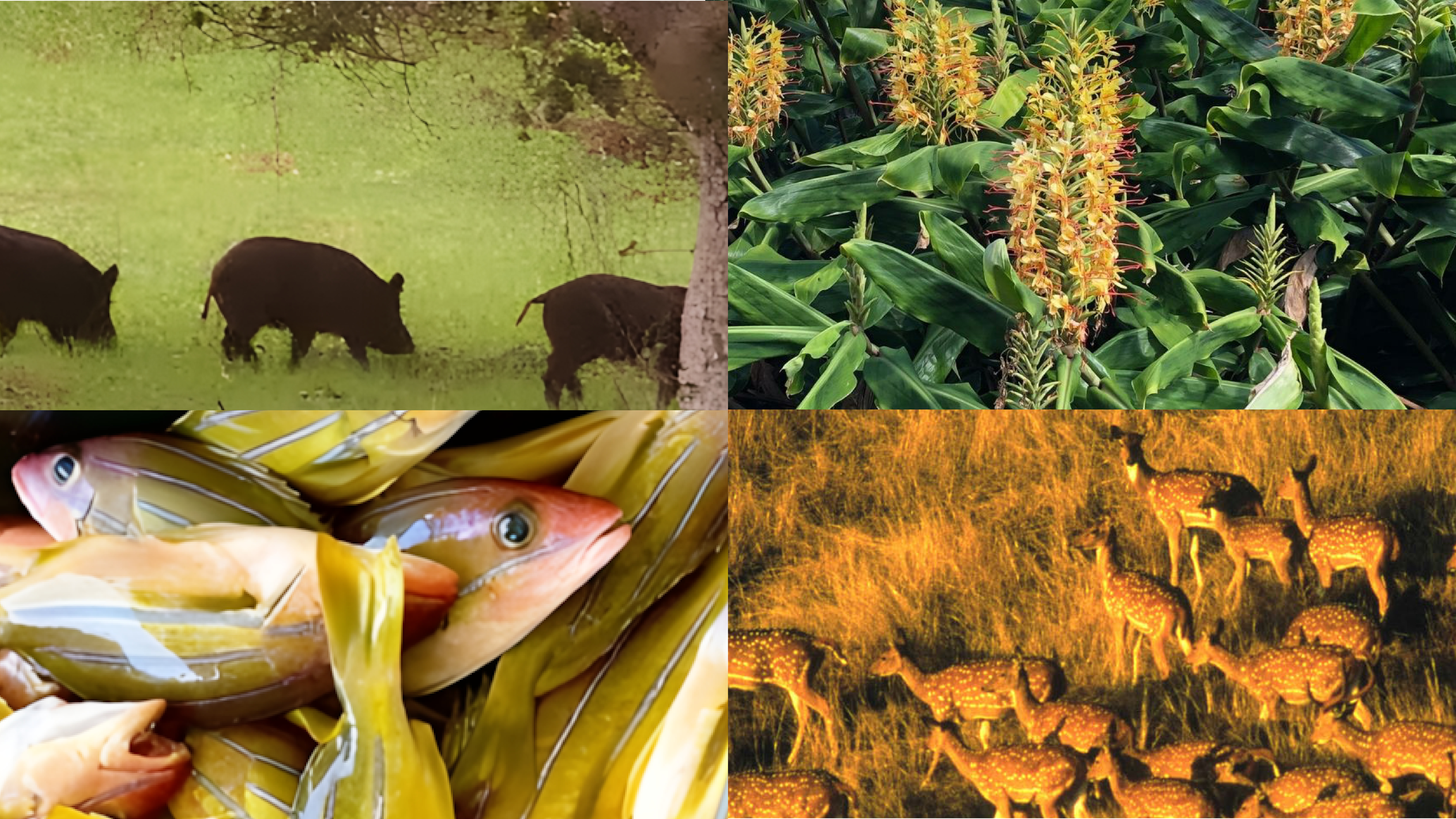
Eat the Invasives: An A to Z Hit List
Another way to practice pono in your life is to aid in the removal of flora and fauna that are destructive invasives in the islands. In some cases, there can be ‘ono involved, too, in that some invasives are actually quite tasty, or at least can be enjoyed as food. We’ve prepared a top hit list of edible invasives. (Note that several entries in this alphabetized summary list were written by Eliza Lathrop of Pilina Farms for a Slow Food event on the mainland, and we appreciate her permission to include them here.)
Axis Deer
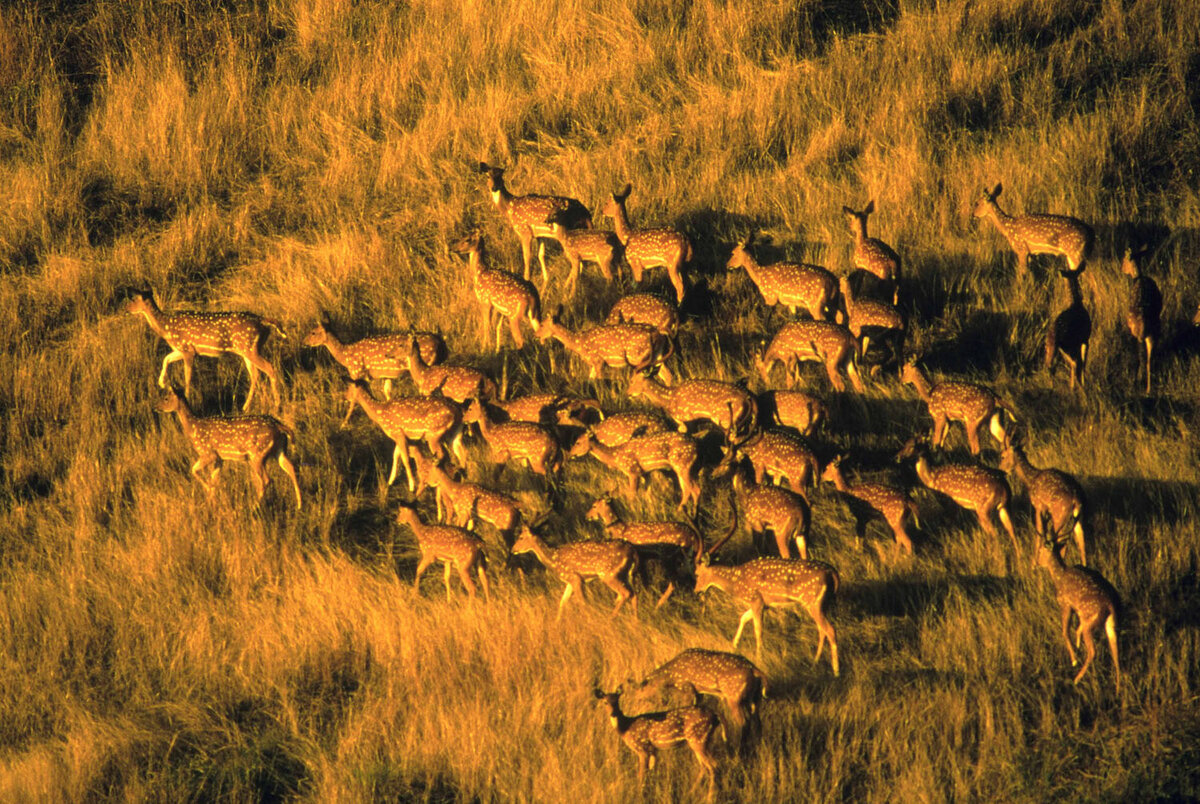
In 1868, King Kamehameha accepted a number of Axis deer as a gift from India and situated them on the island of Moloka‘i. They were introduced to Maui in 1959 to provide stock for hunters. In the islands, they have no natural predators, consume everything, and propagate year ‘round. By current estimates, there are roughly 165,000 deer throughout Maui County (including Moloka‘i and Lana‘i islands), with tens of thousands born each year. In the forest, they eat the native plants and add to soil erosion; when they invade farmland, they wreak havoc and consume crops. While hunting is the way to thin their numbers, there are numerous, complicated federal and state regulations governing how harvesting and processing must be done to allow for commercial sale of the meat. Fortunately, Maui Nui Venison has grown to the point it can now hunt every night (with FDA-required inspectors at every kill), but it needs significant off-island sales, at a premium price, to be able to sell at an affordable price in the islands. Eat to mitigate! Buy venison from Maui Nui Venison, Molokai Wildlife Management, and Makana Provisions.
Chinese Violet
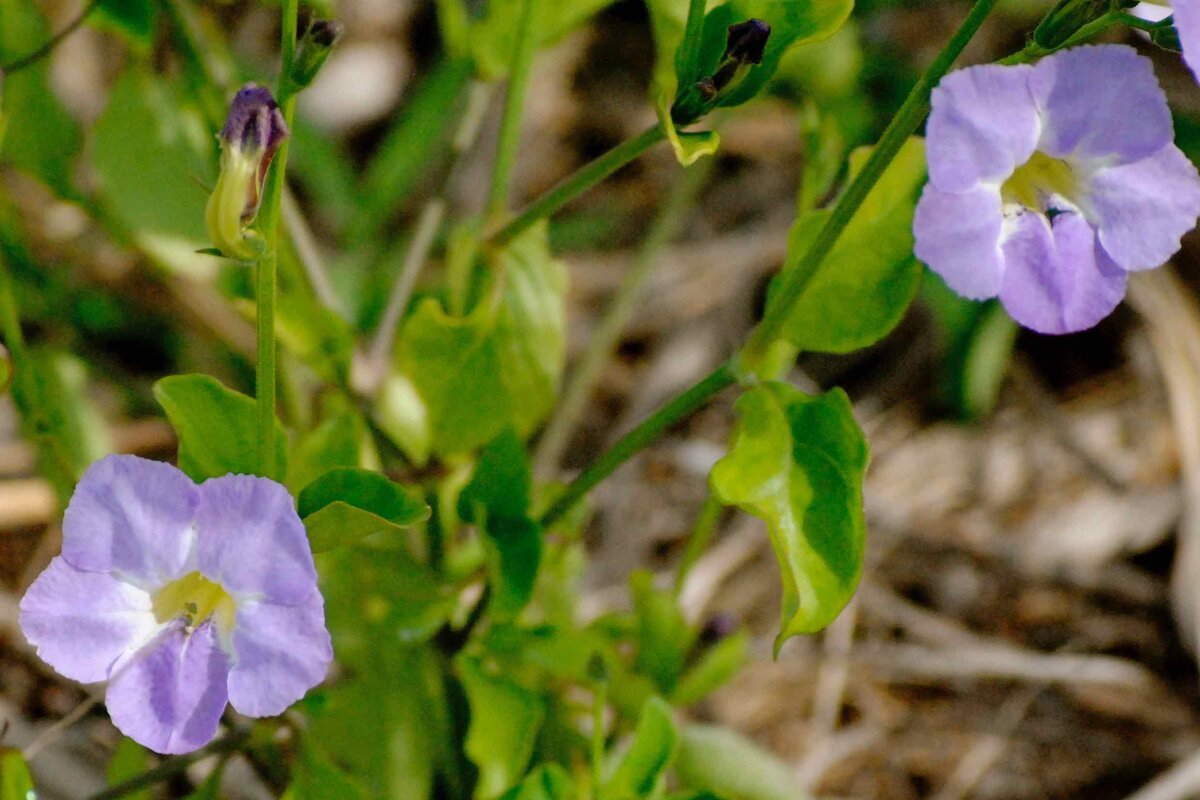
This attractive flowering plant (Asystasia gangetica) was introduced to O‘ahu in 1925 for cultivation as an ornamental but it’s now wild throughout the island chain. It tolerates many soil types and conditions and has become an invasive vine that carpets the ground, choking out other plant life. Oddly, it’s native to India, not China, and is in fact a troublesome invader in some regions of China as well as many tropical regions around the world. The plant is edible. By some accounts, the leaves of the plant are nutritious greens, best eaten after boiling 1 to 2 minutes (and then squeezing excess water out).
Java Plum
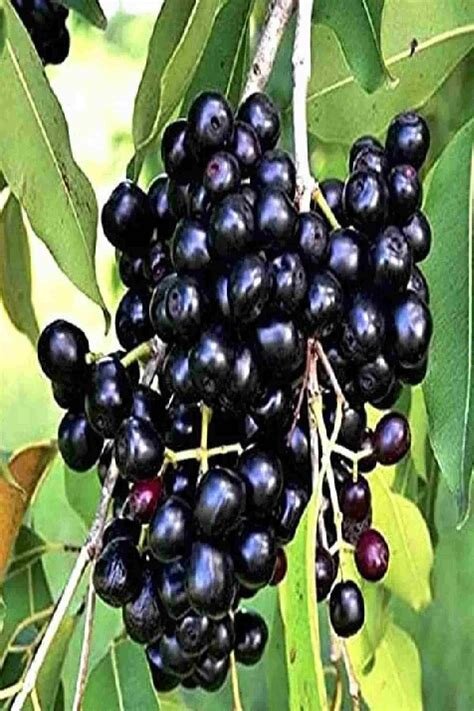
This evergreen mid-size tree (Syzygium cumini) has become naturalized in Hawai‘i, growing in leeward as well as windward locales. It is most common in moist areas of O‘ahu, such as Kāne‘ohe, where it thrives in gulches and grows quite large. Its shade shuts out native plants and trees. It is native to the Indo-Malaysian region but thrives throughout the tropics. The “plum” fruit is most abundant summer to fall. The fruit spoils within a couple of days and its seed is quite large. One recommendation for use of the plum is to cover fruit with water, bring to boil, remove from heat, and then strain out juice and pulp—for use in making juices, syrups, or jelly. Beware of the juice of the fruit as it can stain everything, including your car if parked under a tree!
Kiawe
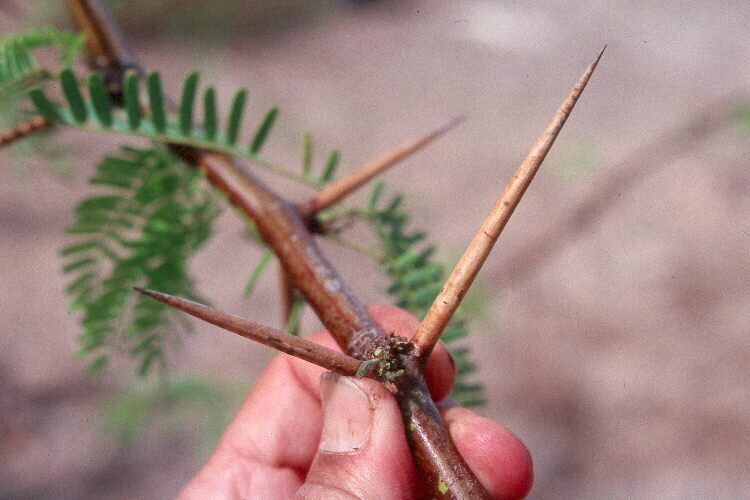
Both long-thorn (thorns up to four inches long) and common kiawe are invasive plants native to South and Central America. The long-thorn variety grows as a leggy shrub or up to 30-foot tree; it prefers dry, coastal habitat. Its thorns are poison tipped and strong enough pierce through a car tire. Common kiawe is just that: it’s in dry habitat everywhere and takes the shape of a small tree; its thorns are just as sharp but only one-inch long. For eating, it’s the kiawe pods you want. Once they are dried and ground, they make nutritious food. Ranchers used to harvest them and make mash for their cattle. Today, you can buy kiawe flour, milled in Wai‘anae, at Farm Link Hawai‘i. It’s a nutritious, gluten-free flour that can substitute for wheat flour in some recipes. Look for Waianae Gold products when you shop (they make brownies, too!).
Purslane
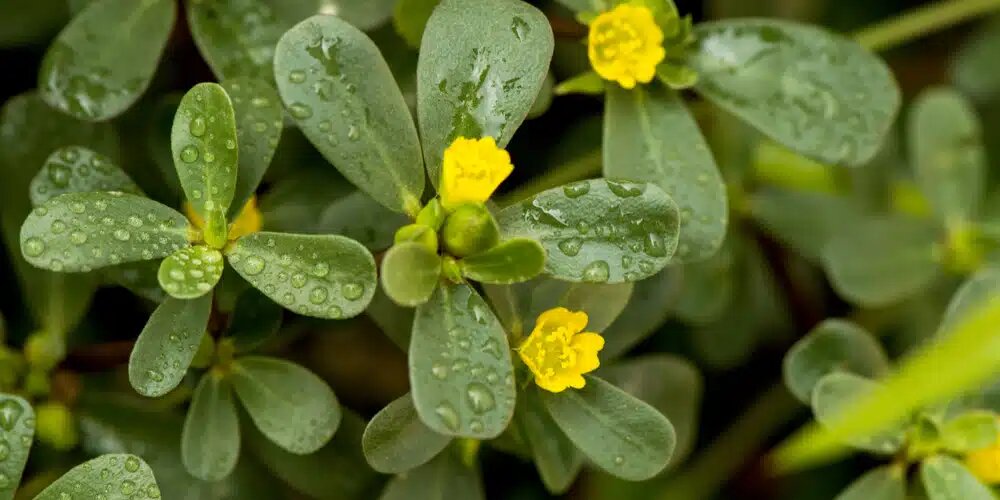
Purslane as Portulaca oleracea is an herbaceous weed that may well be present in your garden. Its origin is likely India but the plant now grows all over the world, including throughout the Hawaiian islands (except, perhaps, Kaho‘olawe). It can be cooked, or eaten raw in salad as a nice, somewhat bitter green. Look for it in your yard and in the wild. Ho Farm harvests it when it grows wild in newly tilled soil; look for their stand at most farmers markets, including Kaka‘ako and KCC on Saturdays, and Blaisdell on Wednesdays. This purslane should not be confused with what’s called “sea purslane” or Sesuvium portulacastrum. Sea purslane is endemic to the islands and known here as ‘ākulikuli. It’s part of the ice plant family, so you’ll find it in coastline habitats. It’s not invasive but it is tasty, and can be eaten raw or cooked. The ancient Hawaiians are thought to have substituted it when they couldn’t find enough limu.
Samoan Crab
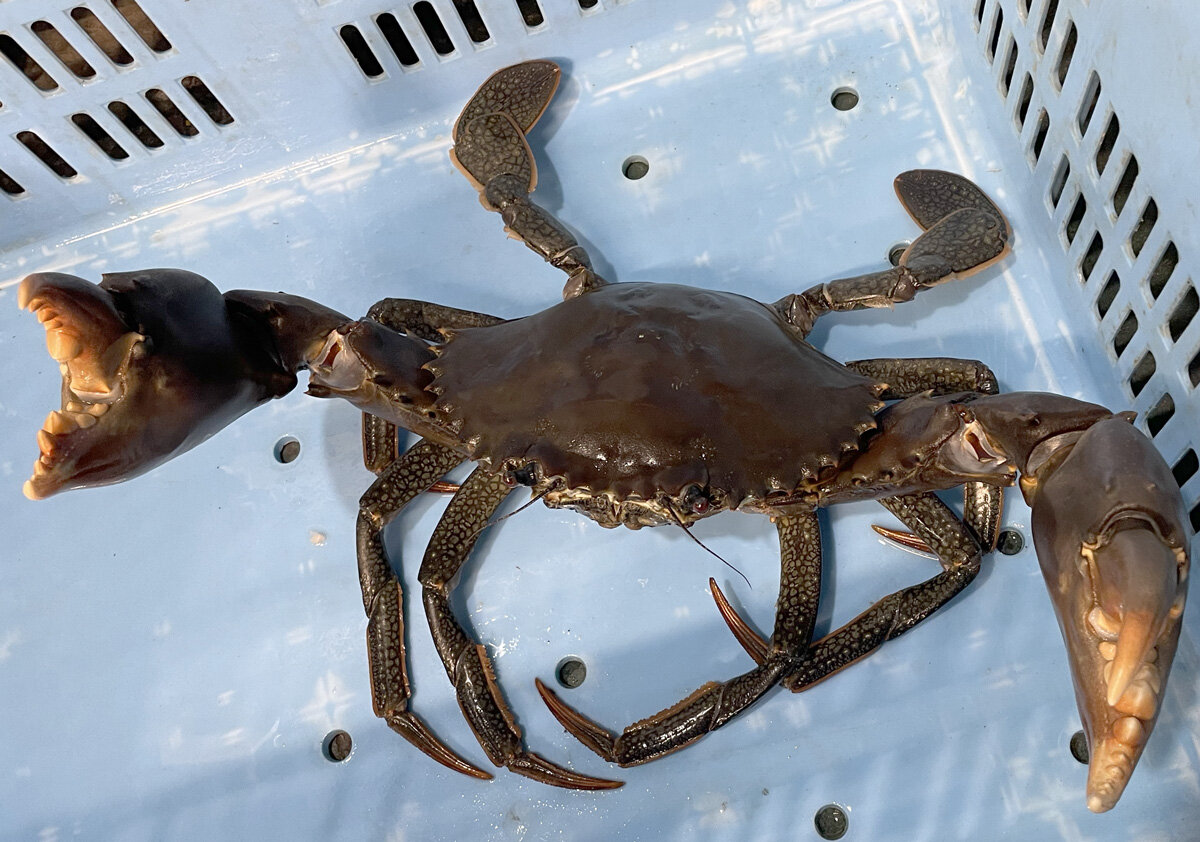
Although Hawai‘i imports far more crab than it harvests, the Samoan crab is one of three crab species on the Monterey Bay Aquarium Seafood Watch list as a “sustainable seafood species” that is harvested here in the islands. They note, “The fishing methods (baited lines; various types of net rings) are benign to habitat (when not set too close to coral reefs) and take little bycatch. However, basic biological information is unavailable for the Hawaiian populations of these species. None have had a stock assessment, and no fisheries management plan is in place. Landings are the main indicator of abundance. Average landings data suggest, but do not prove, that Hawai‘i’s combined-species crab harvests have been relatively stable for the last 22 years.” The Samoan crab, the largest Portunid in Hawai‘i, compared to Kona crab and Kuahonu crab, is considered difficult to harvest in commercial quantity. It is most often found in brackish water habitat. The species was introduced intentionally from Samoa in 1926 for the express purpose of starting a commercial crab fishery at Kāne‘ohe Bay. Although according to Bishop Museum and the University of Hawaii the ecological impact of the Samoan crab is still unstudied in Hawai‘i, it is a large, active and aggressive carnivorous species that undoubtedly feeds on native invertebrate species. (SFO Note: You can find Samoan crab in Chinatown fish markets.)
This item courtesy of Eliza Lathrop.
Strawberry Guava
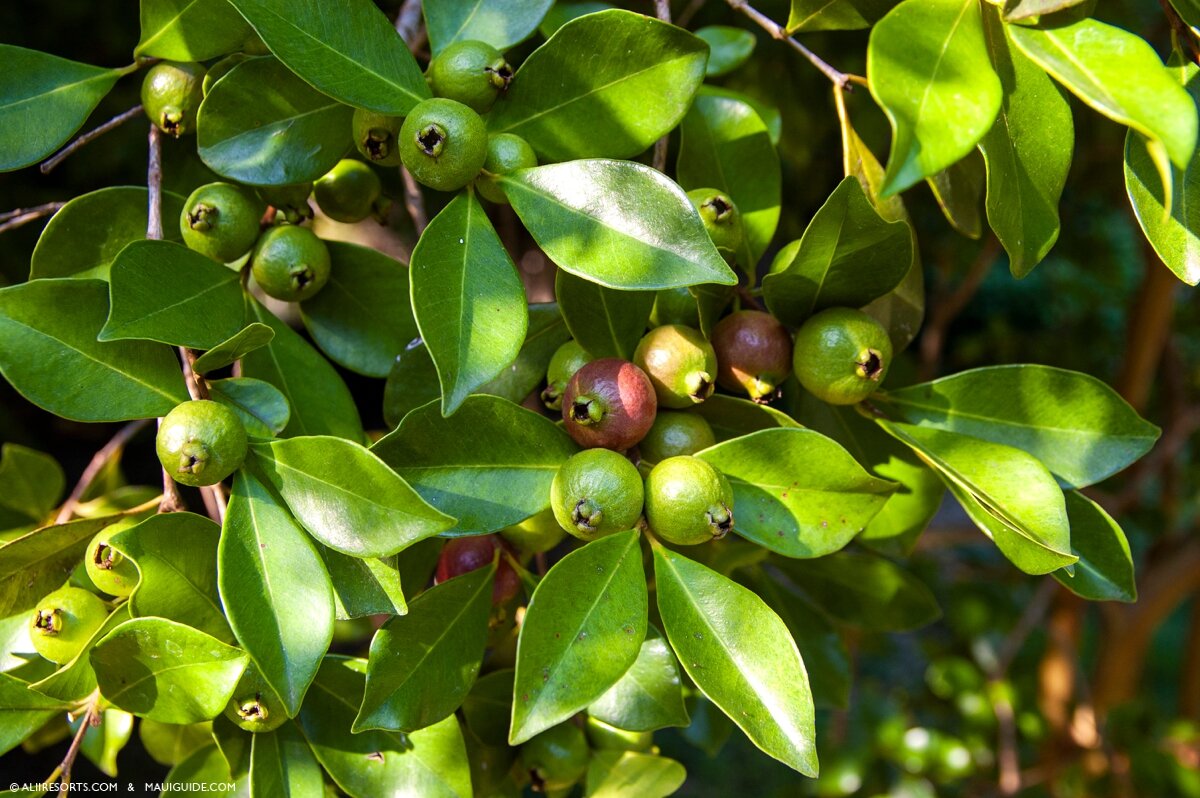
This small tree, which produces a very tasty red (or sometimes yellow) fruit, is considered one of Hawai‘i’s worst invasive species. The strawberry guava, a native of southeastern Brazil, was introduced to the Hawaiian islands almost two centuries ago. In that time it has spread throughout the island chain and has become a standard feature of our forests. It has grown to become the dominant species in many island reserves. Studies have shown that forests infested by strawberry guavas use 27% more water than native ‘ohia forests (and their shade blocks growth of native plants). USDA also reports that the fruit dropped by the plant is a breeding material for oriental fruit flies, which destroy agricultural crops and cost millions of dollars in control and quarantine efforts. (SFO Note: Don’t plant this tree! And when you eat the fruit in the wild, don’t spit the seeds in the forest.)
This item courtesy of Eliza Lathrop.
Ta‘ape
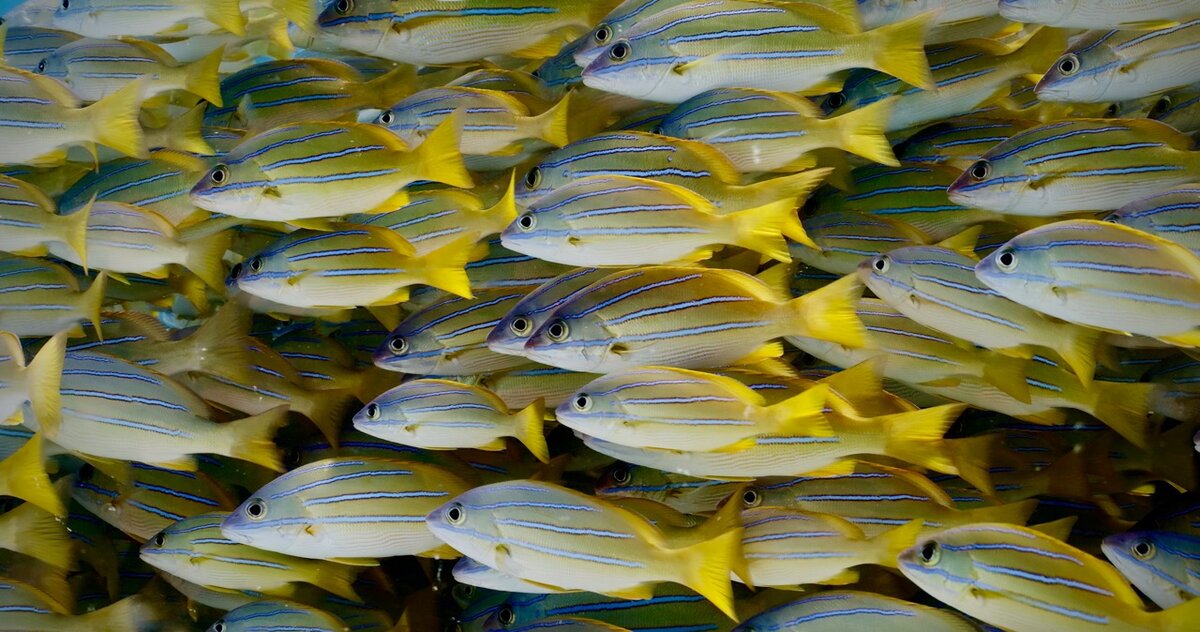
Ta‘ape is a tasty reef fish that’s abundant in the waters of Hawai‘i, and while it’s sustainable for us to eat, it’s a non-native that is putting stress on the fish that are native. Ta‘ape was introduced about 70 years ago to boost local fish supply but the fish have proliferated and now compete with native fish for food and reef habitat. The fish, also known as bluestripe snapper, has delicate, white, mild meat and can be grilled, steamed, fried, or used for ceviche. Ta‘ape is also rated “Best Choice” by the Monterey Bay Aquarium’s Seafood Watch program. Look for the fish in Chinatown markets and through Local I‘a.
Wild Pig
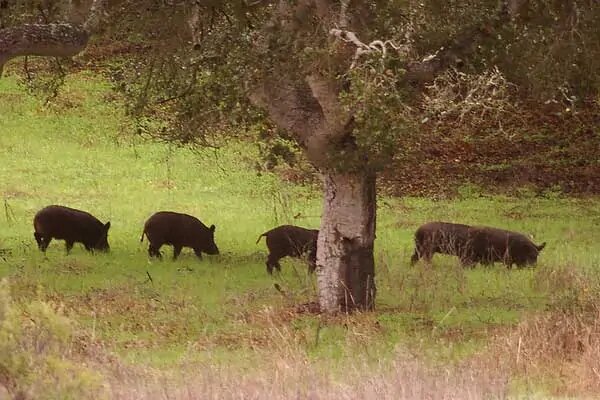
Feral pigs have caused extreme damage to forest ecosystems in Hawai‘i, not only in the physical havoc they cause in their rooting and trampling of vegetation, but also in their tendency to carry and spread other invasive plants, strawberry guava in particular. Their rooting habit additionally creates water pools that become breeding ground for mosquito; because of this feral pig are considered a major contributor to the destruction of native bird populations through avian malaria. The modern-day feral pig is thought to be a cross between the Asiatic domestic pigs brought by early Polynesians and the European pigs Captain James Cook is credited with bringing to our islands. Lana‘i is the only major Hawaiian island free of feral pig. (SFO Note: Watch for the next Slow Food O‘ahu pig butchery class to learn how to safely carve up your own wild pig.)
This item courtesy of Eliza Lathrop.
Yellow Ginger
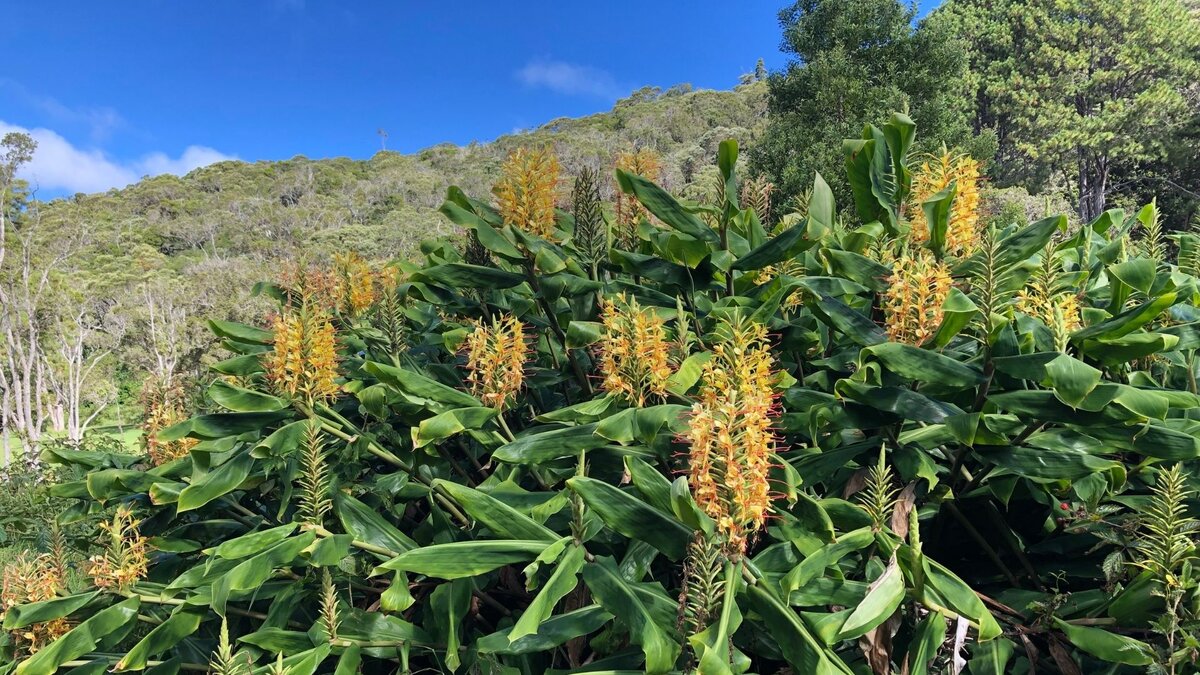
There are two types of “yellow ginger” and it’s important to know the difference: Kahili or “wild” ginger, Hedychium gardnerianum, thrives in the rainforest understory; for instance, around Volcano National Park on Big Island. It hails from the Himalayan foothills. Here, it has overtaken native plants and become a hard-to-eradicate nuisance. It is not toxic but also not great to eat. The other yellow ginger, Hedychium flavescens, loves moist, open areas and, oddly, thrives along roadsides. The fragrant flower is beloved for lei, and the root is a delicious, spicy edible. But the plant has become an invasive weed, choking out native flora everywhere it goes. Eat and enjoy the root but do not put unused rhizomes in your compost!